
Clinicians' attitudes to evolutionary versus genetic explanations for anxiety: cluster-randomised study of stigmatisation
Listen to this summary
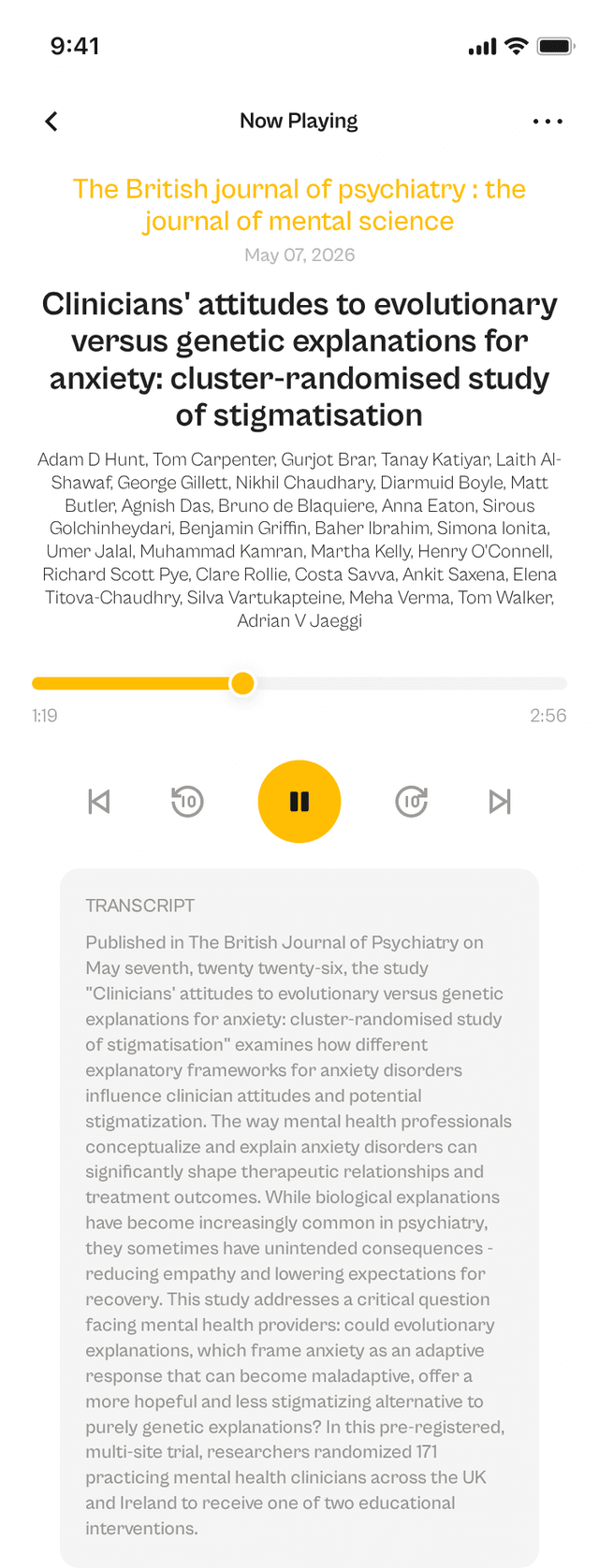
The authors aimed to investigate whether an educational intervention presenting evolutionary explanations for anxiety, as opposed to genetic explanations, would positively influence mental health clinicians' attitudes and reduce stigma. The study found that clinicians rated evolutionary explanations as significantly more useful, leading to increased optimism about patient recovery and greater anticipated public willingness to seek help and share diagnoses. Overall, framing anxiety through an evolutionary lens improved clinicians' attitudes regarding stigma compared to genetic explanations.
This is one of 33,000+ journals available on OSLR. Try it free for 14 days.
Free 14-day trial. 33,000+ journals. Cancel anytime.
More from The British journal of psychiatry : the journal of mental science
View all →May 8, 2026 · The British journal of psychiatry : the journal of mental science
Trauma-informed perinatal care for asylum-seeking and refugee women survivors of conflict-related and gender-based violence in the UK
May 8, 2026 · The British journal of psychiatry : the journal of mental science
Dynamic comorbidity trajectories spanning the diagnosis of depression: nationwide cohort study
May 5, 2026 · The British journal of psychiatry : the journal of mental science
Lithium: challenges of being king
May 4, 2026 · The British journal of psychiatry : the journal of mental science
Understanding ADHD identity and preferred terminology for adults with ADHD in the UK: associations with medication use, well-being and mental health
Apr 30, 2026 · The British journal of psychiatry : the journal of mental science
Real-world effectiveness of mono- and combination therapies of mood stabilisers and antipsychotics in bipolar disorder: nationwide, within-individual study of 315 046 patients
Apr 30, 2026 · The British journal of psychiatry : the journal of mental science
From early intervention in psychosis to intensive care: correlates of restrictive psychiatric practice in a national retrospective cohort study
More in Psychiatry & Neurology
View all →May 8, 2026 · Journal of palliative medicine
"We Talk About Everything": Experiences with Digital Health Communication in Palliative Care
May 8, 2026 · British journal of sports medicine
Incidence of injury and illness at the Paris 2024 Paralympic Games: post-pandemic trends and sport-specific risks
May 8, 2026 · The American journal of sports medicine
Surgical Management of SLAP Lesions in Baseball Throwers: Posterosuperior and Posterior Labral Debridement With or Without Anterosuperior Repair Yields High Return to Play Rates
May 8, 2026 · The American journal of sports medicine
Medial Meniscus Posterior Root Repair in Knees With ≥5° of Varus Alignment Is Associated With Greater Osteoarthritis Progression Compared With <5° Varus Alignment
May 8, 2026 · Critical care medicine
Ivermectin for Critically and Noncritically Ill Hospitalized Patients With COVID-19: Randomized, Embedded, Multifactorial Adaptive Platform Trial for Community-Acquired Pneumonia (REMAP-CAP)
May 7, 2026 · Journal of palliative medicine
Cultural Adaptation and Pilot Implementation of Education in Palliative and End-of-Life Care for Emergency Physicians (EPEC-EM) for Emergency Medicine Practice in Japan
"Oslr has become part of my weekly routine on my day off. The clinical relevance of the summaries is outstanding — I'd rate it 9/10. Being able to consume research hands-free is a huge advantage for busy physicians."

Dr. Jennifer Thompson
Portland, OR
Stay current without falling behind
33,000+ journals. 3-minute audio summaries. Free for 14 days.