
Brief cognitive behavioral therapy for chronic pain rapidly improves pain interference: a randomized controlled trial
Listen to this summary
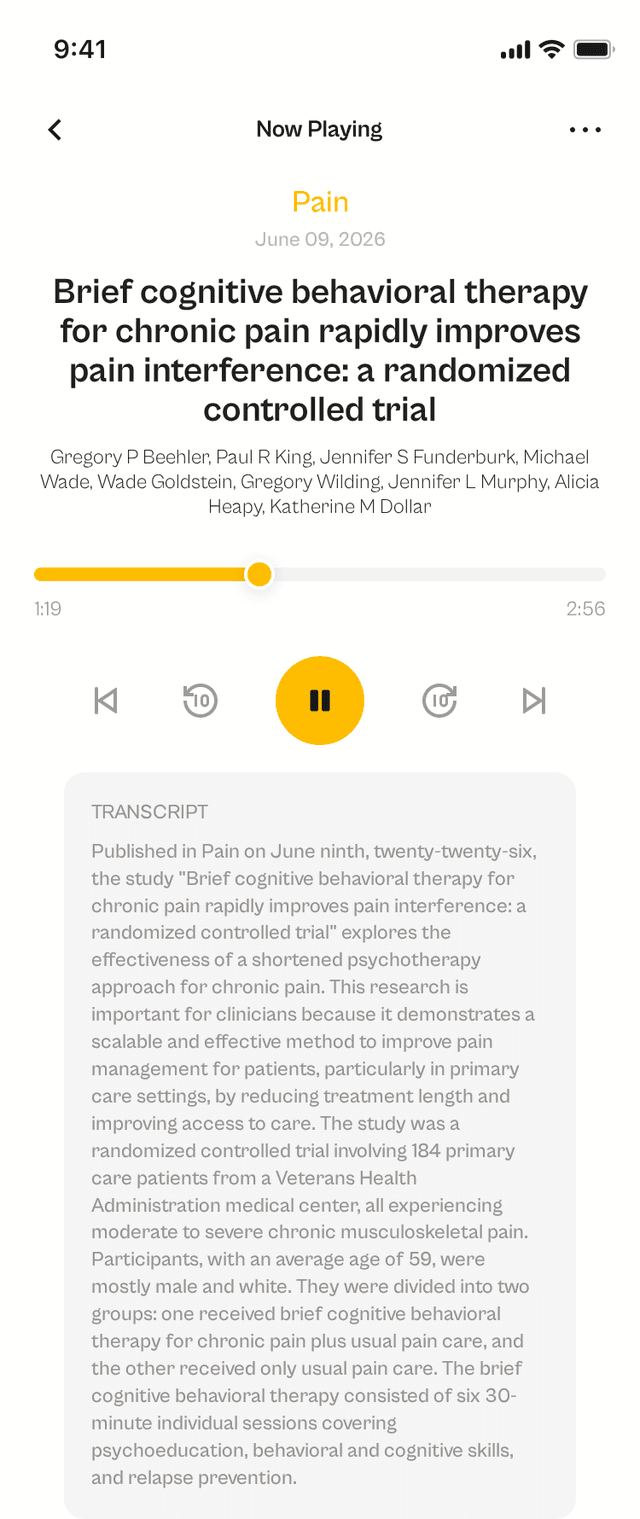
The authors aimed to evaluate the effectiveness of brief cognitive behavioral therapy (CBT) for chronic pain in improving pain interference among primary care patients with moderate to severe chronic musculoskeletal pain. Their randomized controlled trial demonstrated that participants receiving brief CBT alongside usual pain care experienced significant and sustained improvements in pain interference, physical quality of life, and sleep quality compared to those receiving usual care alone. This study highlights the potential of abbreviated behavioral treatments to enhance access to care and improve patient outcomes in chronic pain management.
This is one of 33,000+ journals available on OSLR. Try it free for 14 days.
Free 14-day trial. 33,000+ journals. Cancel anytime.
More in Anesthesiology
View all →Sep 23, 2026 · The New England journal of medicine
Etuvetidigene Autotemcel for the Treatment of Wiskott-Aldrich Syndrome
Sep 23, 2026 · The New England journal of medicine
Clinical Uses of Common Genetic Variants Associated with Common Diseases
Sep 23, 2026 · The New England journal of medicine
Phase 1 Study of Anito-cel, a d-Domain BCMA CAR T Cell for Refractory or Recurrent Myeloma
Sep 23, 2026 · The New England journal of medicine
Effect of Screening with Multicancer Early-Detection Test on Late-Stage Cancer Diagnosis
Sep 22, 2026 · Lancet (London, England)
Current advancements in the care of peripheral arterial disease: modern approaches to medical, endovascular, and surgical treatment
Sep 22, 2026 · Anesthesiology
Effect of In-line Clinical Decision Support to Improve Accuracy of American Society of Anesthesiologists Physical Status Documentation: A Two Center Evaluation of a Quality Intervention
"Oslr has become part of my weekly routine on my day off. The clinical relevance of the summaries is outstanding — I'd rate it 9/10. Being able to consume research hands-free is a huge advantage for busy physicians."

Dr. Jennifer Thompson
Portland, OR
Stay current without falling behind
33,000+ journals. 3-minute audio summaries. Free for 14 days.