
Impact of Early Initiation of Automated Insulin Delivery on Glycemia Two Years from Type 1 Diabetes Diagnosis
Listen to this summary
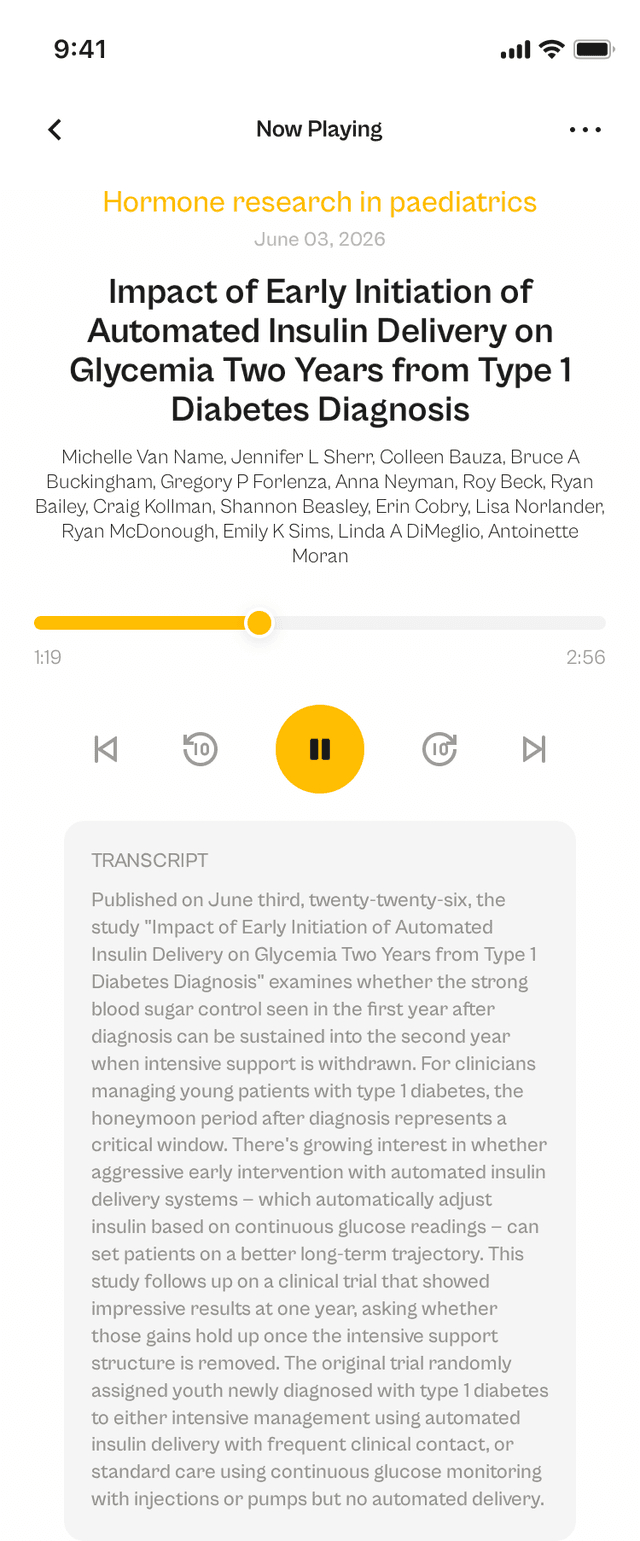
The authors aimed to determine whether the high time in range (TIR) achieved through automated insulin delivery (AID) in youth with type 1 diabetes (T1D) shortly after diagnosis would persist over a two-year period. Their analysis found that while the TIR remained stable in the control group, it declined significantly in the AID group from 79% to 67% over the second year, with no significant differences in overall glycemic control between the two groups at 104 weeks. This suggests that the benefits of early AID initiation may diminish over time.
This is one of 33,000+ journals available on OSLR. Try it free for 14 days.
Free 14-day trial. 33,000+ journals. Cancel anytime.
More from Hormone research in paediatrics
View all →Jun 11, 2026 · Hormone research in paediatrics
PREDICTORS OF RESPONSE TO GROWTH HORMONE TREATMENT AND FINAL HEIGHT IN MEDULLOBLASTOMA SURVIVORS
Jun 10, 2026 · Hormone research in paediatrics
The Use Of EQ5D For Assessment Of Health Related Quality Of Life And Its Determinants In Children With Complex Endocrine Conditions
More in Pediatrics
View all →Jun 25, 2026 · Blood
Combining Quizartinib with intensive chemotherapy in older patients with newly diagnosed AML: results of the UK NCRI AML18 Trial
Jun 25, 2026 · Blood
Translational Regulation of Sf1 Integrates Alternative Splicing and Hematopoietic Stem Cell Fate
Jun 25, 2026 · The American journal of sports medicine
Association of Central Acetabular Osteophytes With Microinstability and Increased Combined Anteversion in Borderline Dysplasia Hips
Jun 25, 2026 · Blood
Galectin-1 Fuels Monocyte Hyperinflammation and Represents a Novel Therapeutic Target in Myeloproliferative Neoplasms
Jun 25, 2026 · Blood
NG2-ITGA4 axis regulates Rho GTPases and leukemic aggressiveness in KMT2A-r B-ALL and is targetable with natalizumab
Jun 24, 2026 · Critical care medicine
Ethical Implications of the Slow Code: A Systematic Review of Ethics of Slow Codes in U.S. Hospitals
"Oslr has become part of my weekly routine on my day off. The clinical relevance of the summaries is outstanding — I'd rate it 9/10. Being able to consume research hands-free is a huge advantage for busy physicians."

Dr. Jennifer Thompson
Portland, OR
Stay current without falling behind
33,000+ journals. 3-minute audio summaries. Free for 14 days.