
Optimising triage of urgent referrals for suspected IBD: results from the Birmingham IBD inception study
Listen to this summary
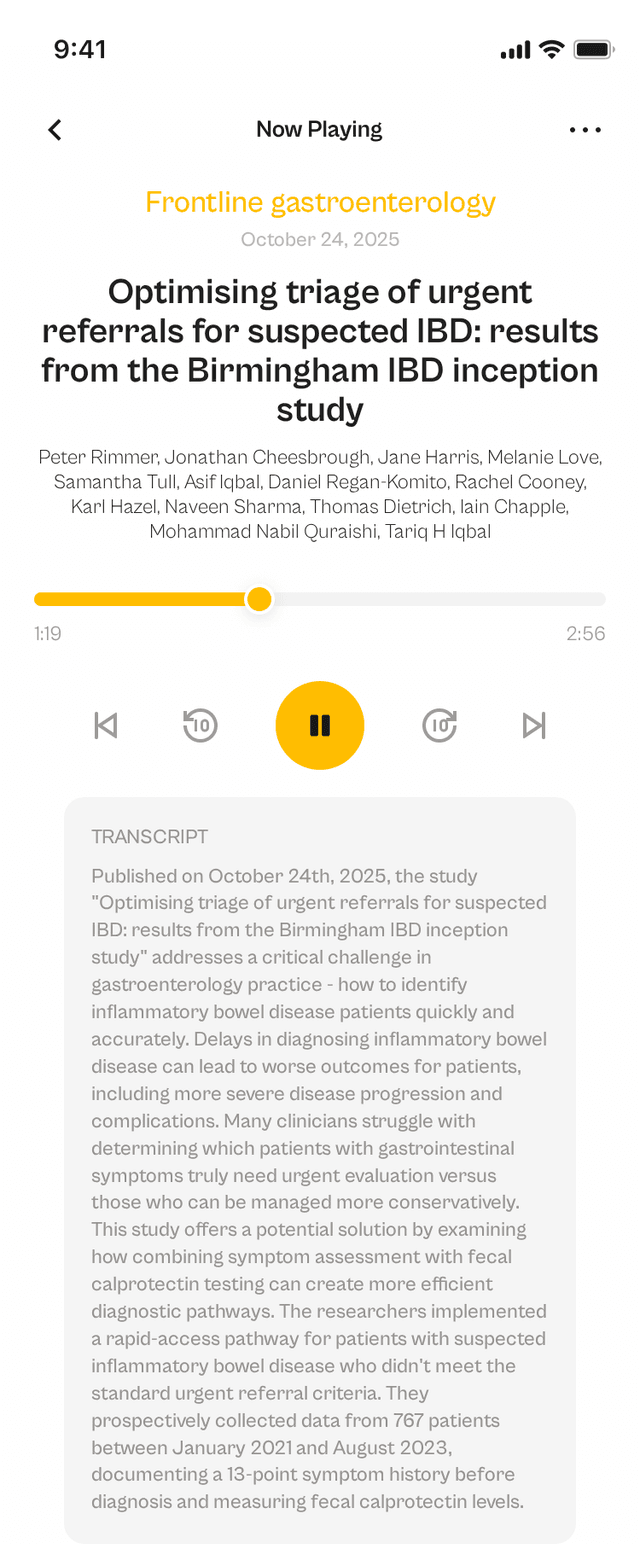
The authors aimed to optimize the triage process for urgent referrals of suspected inflammatory bowel disease (IBD) by evaluating the effectiveness of combining clinical history and faecal calprotectin (FCP) measurements for early diagnosis. Their findings indicate that serial FCP testing can reduce unnecessary colonoscopies, with specific thresholds for FCP levels providing a reliable method for directing patients to appropriate care pathways. Ultimately, the study suggests that integrating home FCP testing with symptom assessment could enhance self-referral processes for IBD diagnosis.
This is one of 33,000+ journals available on OSLR. Try it free for 14 days.
Free 14-day trial. 33,000+ journals. Cancel anytime.
More from Frontline gastroenterology
View all →Mar 11, 2026 · Frontline gastroenterology
Recent advances in the diagnosis and management of amoebiasis
Sep 11, 2025 · Frontline gastroenterology
Liver transplant assessment for hepatocellular carcinoma: a single-centre experience
Jun 19, 2025 · Frontline gastroenterology
Correction: Recent advances in the diagnosis and management of amoebiasis
Jun 21, 2024 · Frontline gastroenterology
Real-world effectiveness of upadacitinib in Crohn's disease: a UK multicentre retrospective cohort study
May 23, 2024 · Frontline gastroenterology
What is the clinical significance of low serum amylase? Systematic review of the conditions associated with low serum amylase
May 23, 2024 · Frontline gastroenterology
Significance and structure of clinical research in the UK: an introduction for gastroenterology and hepatology nurses
"Oslr has become part of my weekly routine on my day off. The clinical relevance of the summaries is outstanding — I'd rate it 9/10. Being able to consume research hands-free is a huge advantage for busy physicians."

Dr. Jennifer Thompson
Portland, OR
Stay current without falling behind
33,000+ journals. 3-minute audio summaries. Free for 14 days.